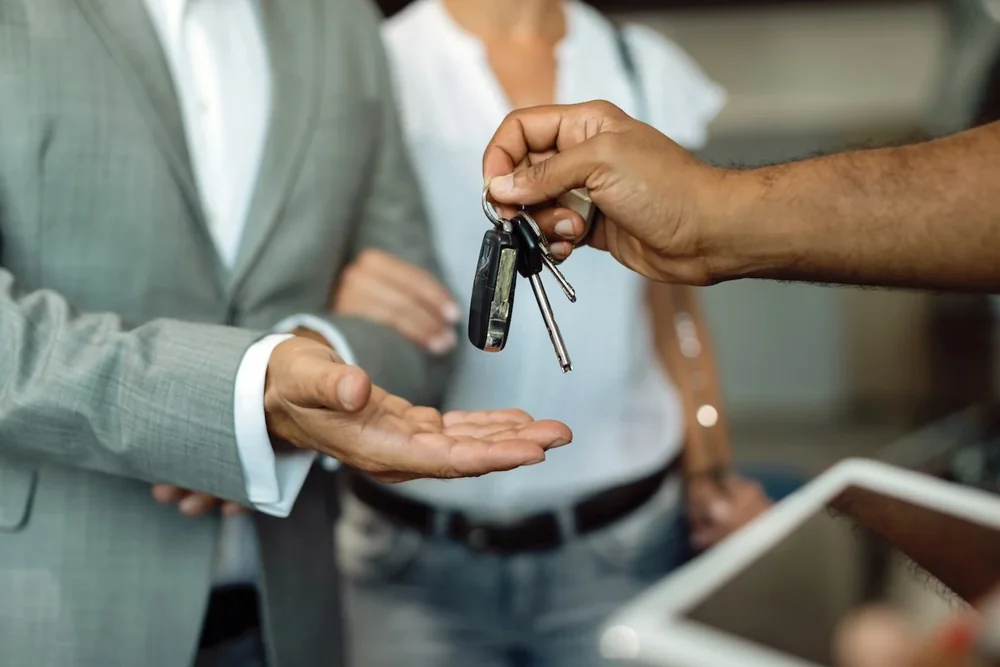
In California, selling a car takes anywhere from the same day to about six weeks, and the method you choose sets the range: an instant offer or professional local buyer can close from the same day to 48 hours, a dealership trade-in usually takes 1 to 3 days, and a private sale typically runs 2 to 6 weeks. But the method only sets the ceiling. What sets the floor is your paperwork — title, smog, and any loan payoff — because no method can finish faster than your documents allow. Get those in order first and every option below moves at its best speed.
Here’s how the timeline actually breaks down for each route, what makes it faster or slower, and the California-specific steps that catch sellers off guard.
Private sale: 2 to 6 weeks
A private sale has the highest payout potential and the least predictable timeline, because you’re doing every step yourself. It helps to think of it in three phases:
- Prep and listing (1–3 days). Cleaning, photographing, writing the listing, and posting it.
- Finding a serious buyer (a few days to several weeks). This is the phase that swings the most. A well-priced, in-demand car can get real inquiries within a week; an overpriced or niche vehicle can sit for over a month.
- Closing (1–3 days). Test drive, negotiation, payment verification, and completing the title paperwork.
Two things move this timeline more than anything else: price and demand. Price at the market and you’ll cut the waiting phase dramatically; stretch your asking price and the car lingers. Local demand matters too — in the Bay Area, EVs, hybrids, and fuel-efficient compacts tend to move faster than the national average, while larger or specialized vehicles can take longer. Timing plays a role as well, which is why it’s worth understanding how seasonality affects used-car prices before you list.
Dealership trade-in: 1 to 3 days
A trade-in is fast because it’s folded into buying your next car. The dealer handles your loan payoff and the DMV paperwork, and the value is applied straight to your new purchase, often in a single visit. The tradeoff is a lower payout — the dealer builds in resale margin — and it only makes sense when you’re buying from that same dealer at the same time. If you’re not, you’re accepting the lower number without the convenience that justifies it.
Instant offer or professional local buyer: same day to 48 hours
This is usually the fastest way to sell a car in California, and just as importantly, the most predictable. The process is short: you submit your vehicle details, receive an offer, and once you accept, the inspection, pickup, and payment are arranged — frequently the same day or within two. Because a firm offer holds when the car matches its description, there’s no re-listing, no chasing a buyer who never commits, and no payment risk. You trade a bit of the private-sale upside for speed and certainty.
Online marketplaces and consignment: the in-between
Listing platforms like Autotrader, Cars.com, Facebook Marketplace, and Craigslist give you broad exposure, but they don’t speed up the sale itself — you still screen buyers, schedule test drives, verify payment, and handle the paperwork, so the timeline mirrors a private sale. Consignment (letting a dealer sell it for you) is more hands-off, but it can take several weeks and the dealer takes a cut. Neither is a shortcut; they’re variations on the private-sale timeline with different amounts of effort.
California-specific steps that affect your timeline
Even the fastest method depends on a handful of California requirements being ready. These are what most often turn a “same-day” sale into a longer one:
- Title and release of liability. You sign the title over to the buyer and file a Notice of Transfer and Release of Liability with the DMV within five days. The filing is quick and online, but the title itself has to be clean and in hand first.
- Smog certificate. If your vehicle needs one, a smog check is usually same-day at a station, but it’s still a step to plan for, and the certificate is valid for only 90 days.
- A lost or missing title. Ordering a replacement through the DMV can add days to a few weeks, so resolve it before you agree on a sale path rather than after a buyer is waiting.
- A financed car. If there’s a loan, getting an accurate payoff figure and clearing the lien can add anywhere from a day to a couple of weeks depending on your lender — payoff quotes are usually good for about 10 days. Confirm it early; here’s how loan payoff works when selling a financed car.
The common thread is that paperwork readiness, not the selling channel, is usually the real bottleneck. For the complete state-specific list, see the documents you need to sell a car in California.
How to shave time off any method
Whichever route you pick, a few moves consistently speed things up:
- Get your paperwork ready first — title, registration, ID, service records, and both key fobs — so nothing stalls at the finish line.
- Price to the market, not to your hopes. A realistic number is the single biggest lever on how fast a private sale closes.
- Resolve any lien or lost-title issue early, before you’re mid-negotiation.
- Respond quickly to inquiries; serious buyers move on fast.
- Get one firm offer as a floor. Even if you’d prefer to sell privately, a real local offer in hand tells you your car’s baseline value and gives you a fast fallback if the private route drags.
The fastest route, if speed is the priority
If getting it done quickly matters more than squeezing out every last dollar, a firm instant offer from a professional local buyer is typically the most predictable path — you skip the listings, the meetups, and the payment risk entirely. AutoLetGo gives Bay Area drivers a local offer based on Kelley Blue Book and the car’s condition, with pickup support when the vehicle qualifies and is in our service area (San Francisco, Marin, San Mateo, Santa Clara and Alameda counties) — often the same day or within 48 hours.
Want to see what your car could sell for? Get a local offer from AutoLetGo.