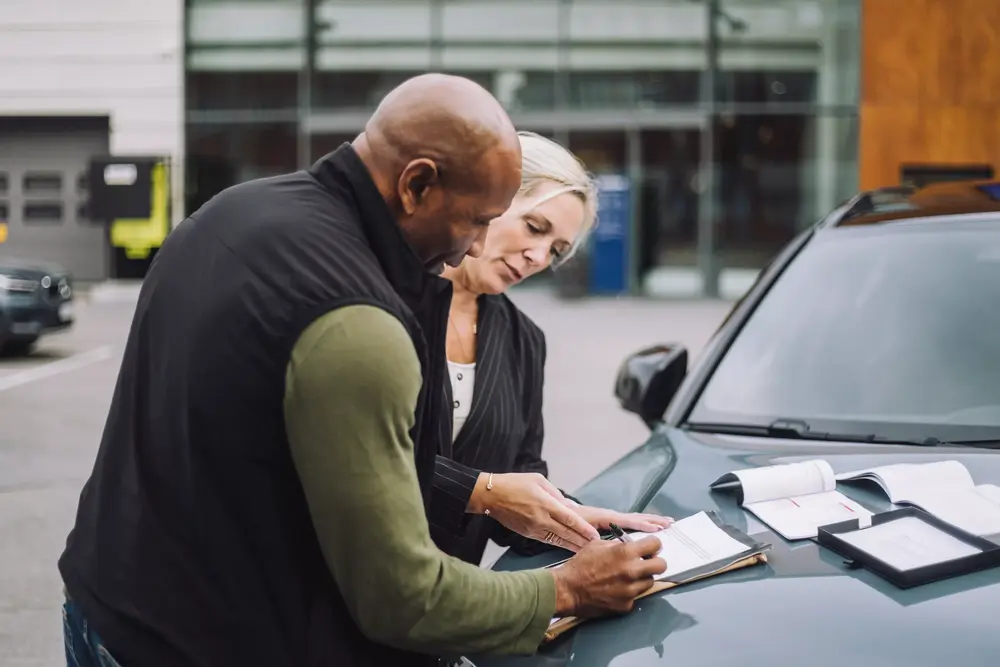
Yes, you can sell a car with a loan still attached to it. You need to take one extra step compared to selling a car you own outright. Because your lender holds a lien on the vehicle, the loan has to be settled as part of the sale before the title can change hands. Once you understand the payoff process, it’s far more straightforward than most sellers expect. Here’s exactly how it works, from getting your payoff number to keeping the whole transaction safe.
Can you sell a financed car?
When you finance a vehicle, the lender records a lien against it. That lien is the lender’s legal claim to the car until the debt is repaid. In practice, it means you can’t simply sign the title over to a buyer — the loan has to be paid off and the lien cleared first.
So selling a financed car isn’t blocked; it just runs through the lender. The sale proceeds go toward closing out the loan, and whatever happens next depends on how the car’s value compares to what you still owe.
Start with your car loan payoff amount
The first thing to nail down is your payoff amount. This is not the same as the balance printed on your monthly statement. A payoff quote states the amount the lender requires to settle the loan by the date shown. It can differ from your statement balance because of interest and other charges. Confirm the quote’s expiration date, payment instructions, and any daily interest before arranging the sale.
To get it, contact your lender and request a formal car loan payoff quote. Most lenders provide this by phone, through their app, or in your online account. Two details matter:
- A per-diem (daily) interest figure. Because interest accrues daily, your payoff creeps up slightly each day until the loan is settled.
- An expiration date. Payoff quotes are only good for a set window — commonly a 10-day payoff period. If the sale closes after that window, you’ll need to request an updated number.
Knowing your payoff amount up front tells you precisely how much of the sale price has to go to the lender, and how much, if any, is left over for you. Keep in mind that a buyer’s offer can shift over time just as your payoff does — here’s how instant cash offers work and why they can change.
Positive equity vs negative equity
Compare your payoff amount to what the car is actually worth on the market. That comparison puts you in one of two positions:
Positive equity means the car is worth more than you owe. For example, if your payoff is $12,000 and the car sells for $15,000, the loan gets paid off and the remaining $3,000 is yours.
Negative equity — also called being “upside down” or “underwater” — means you owe more than the car is worth. If your payoff is $15,000 but the car only sells for $12,000, you have to cover the $3,000 gap out of pocket to clear the loan. Confirm how the shortfall will be covered before accepting an offer. A promise to pay off your old loan does not mean the negative equity disappears. If it is added to a new loan, you still owe that amount.
If you want to run the numbers carefully, knowing what your car is actually worth is half the equation — our guide on what affects your car’s resale value and what you can actually control helps you pin down that side of the math.
The written sale terms should explain who sends the payoff, how any shortfall or surplus is handled, and what evidence confirms that the lender has received payment. Signing the sale paperwork and receiving the final title documents can happen at different stages. Rolling negative equity into another loan can increase the amount financed and leave you further underwater. The CFPB notes that this may increase the risk of a deficiency balance if the borrower later cannot repay the loan.
How lien release works
Payoff, lien release, and title processing are separate steps. After the loan is settled, the lender releases its interest and the required title process follows. Ask the lender how it will confirm payoff and where the title or release documents will be sent.
Depending on the lender and your state, the release can happen a few ways: the lender mails the clear title directly to you, sends it to the new owner, or files the release electronically with your state’s motor vehicle department. The timing depends on the lender, payment method, and whether the title is electronic or paper. In California, an electronic lienholder sends a lien satisfaction notice to the DMV after the loan is paid. Confirm the lender’s process before deciding when the vehicle, payment, and title documents will change hands.
For California electronic titles, ask the lender how it will submit the lien satisfaction and which party will receive the resulting title. The DMV’s Electronic Lien and Title program describes different outcomes depending on who satisfies the lien. Do not treat a payoff receipt as proof that every title step is complete.
What happens at closing
The safest way to close is to route the payment through the lender rather than around it. A typical flow looks like this:
The buyer’s funds first cover the loan payoff, paid directly to the lender. If there’s positive equity, the buyer pays you the difference separately. The lender then releases the lien and the title clears, and the buyer registers the car in their name with a clean title.
For a private sale, arrange the closing method with your lender and buyer in advance. Confirm how the lender will receive the payoff, how any remaining money will reach you, and when the car and documents will be handed over. If the offer is below the payoff amount, agree on how the shortfall will be covered.
Keeping the sale safe
A financed sale has more moving parts than a cash sale, so a few precautions protect everyone:
- Pay the lender directly. Don’t rely on a buyer to pay off your loan on your behalf after the fact.
- Agree on the handoff before releasing the car or signing transfer documents. For a private sale, confirm the payoff and release process with the lender. When selling to a licensed vehicle buyer, obtain written terms identifying who handles the payoff and when. Keep payment and transfer records.
- Use a bank or escrow service for private sales. Meeting at a bank lets a buyer’s funds be verified and the loan paid off in a controlled setting. An escrow service can hold funds until the lien release is documented.
- Get everything in writing, including the payoff confirmation and proof of the lien release.
A financed sale also tends to involve larger sums and more strangers, so it pays to keep the process controlled — our guide on how to sell your car without meeting strangers covers safe options and a realistic timeline.
Documents you’ll need
Having your paperwork ready keeps the closing quick. Typically you’ll want:
- The vehicle title (your lender may hold it until payoff)
- Your loan account number and a current payoff quote
- A valid photo ID
- The car’s registration
- A bill of sale
- Any odometer disclosure your state requires
California sellers should also file a Notice of Transfer and Release of Liability within five days after the sale. An NRL reports the sale; it does not complete the buyer’s title transfer. Save your confirmation. Depending on the vehicle and transaction, a valid smog certification may also be required.
For a full rundown of the paperwork and condition that matter most before you list, see our guide to buyer-ready vehicles — what documentation and condition matters most.
Selling to a private buyer or a buying service
A private sale can net you more money, but it puts the payoff coordination on you and the buyer. A professional vehicle buyer may coordinate the payoff and title paperwork with your lender. Ask what it handles, what you need to provide, and how completion will be documented. The process still depends on the lender and the transaction. If speed matters, our guide on how to sell your car fast in the Bay Area breaks down the quickest routes.
We regularly help Bay Area drivers sell a financed car, and in many cases we can manage the car loan payoff and lien release directly with your lender. That said, every situation is different — the loan terms, the equity position, and the vehicle itself all factor in — so we evaluate financed cars case by case rather than guaranteeing every one. Start by sharing your vehicle details and telling us that the car is financed. Our team will explain which lender documents are needed for your situation. Do not include account passwords or full loan account details in an initial general inquiry.
Ready to sell a car with a loan?
Start with a current lender payoff quote, compare it with the offer, and agree in writing on the payment and title process. AutoLetGo reviews financed vehicles case by case and can explain the next steps for your car.
Submit your vehicle details to get an offer and learn how the payoff may be handled in your situation.